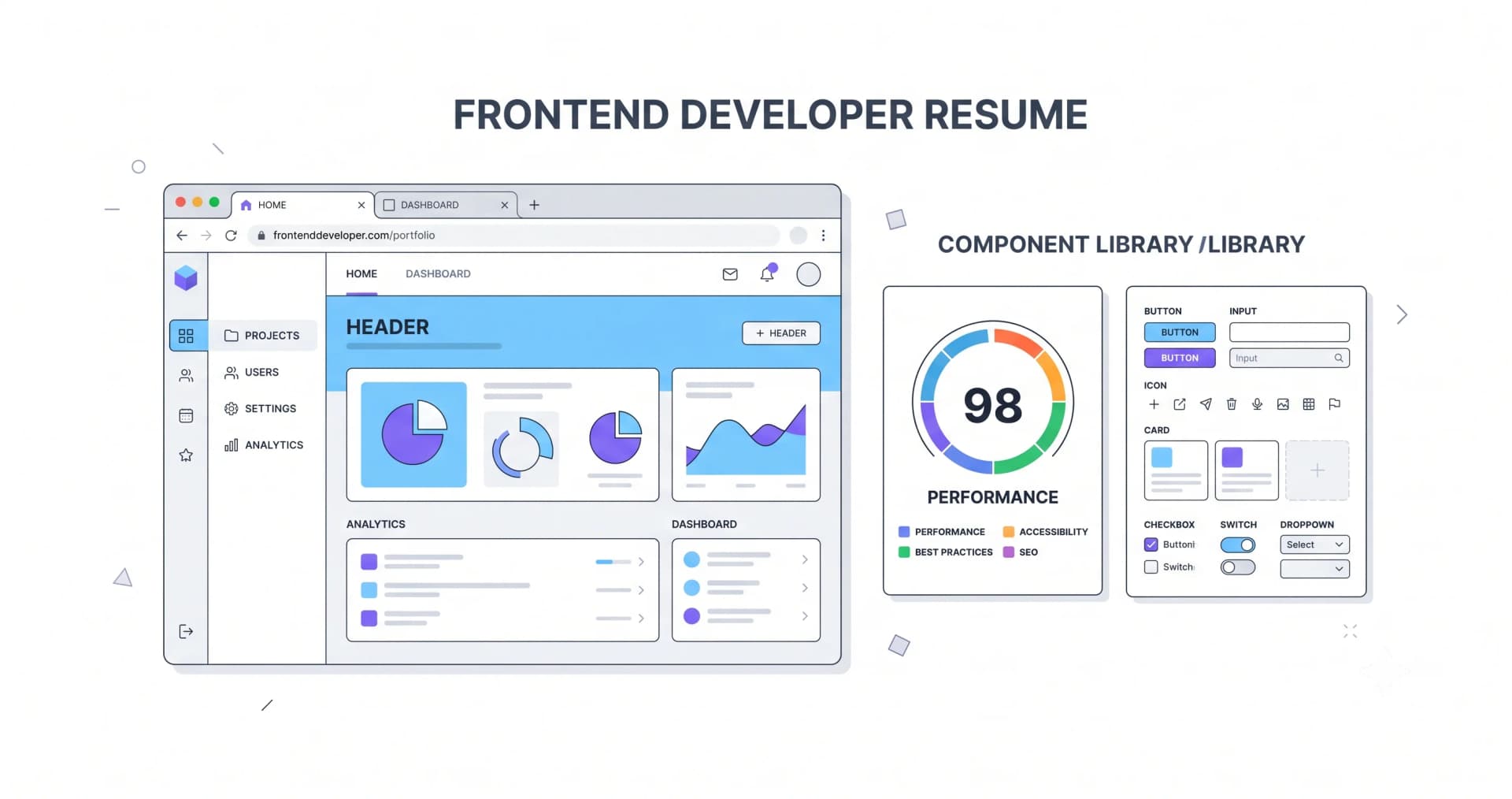
Frontend is the easiest specialisation to demonstrate and the one most often described vaguely. You can link to what you built; do that, and put numbers on it.
Numbers that exist in frontend work
- Performance — LCP, bundle size, Lighthouse score, time-to-interactive
- Scale — monthly active users, pages, components, supported locales
- Conversion — signup or checkout completion, drop-off reduced
- Accessibility — WCAG level reached, issues fixed, screen-reader support added
- Velocity — components in a shared library, teams consuming it, time saved per feature
Write the shipped feature, not the framework
Developed responsive web pages using React, Redux and Tailwind CSS as per designs.
Rebuilt the checkout flow in React + TypeScript for 180k monthly users; cut LCP from 4.1s to 1.6s and abandoned carts by 9% by code-splitting and deferring third-party scripts.
Design-system and component work
If you've built or maintained a shared component library, that's senior-signal work and deserves its own bullets: how many components, how many teams consumed them, how you handled versioning and breaking changes.
Link something that loads
A live URL beats a GitHub link, and a GitHub link beats neither. Two rules: it must load on mobile, and it must be yours. Recruiters do open these, usually on a phone, usually on a weak connection.
What's expected in 2026 and what's optional
- Expected — TypeScript, a modern framework (React/Next.js, Vue/Nuxt, Angular), responsive CSS, Git, basic testing
- Differentiating — Core Web Vitals work, accessibility, SSR/streaming, design systems, animation craft
- Optional — jQuery, Bootstrap 3, and anything you last touched in college
Put this into practice
Build, score and tailor your resume with JotCV — free plan, no card needed.
Publish a portfolio page