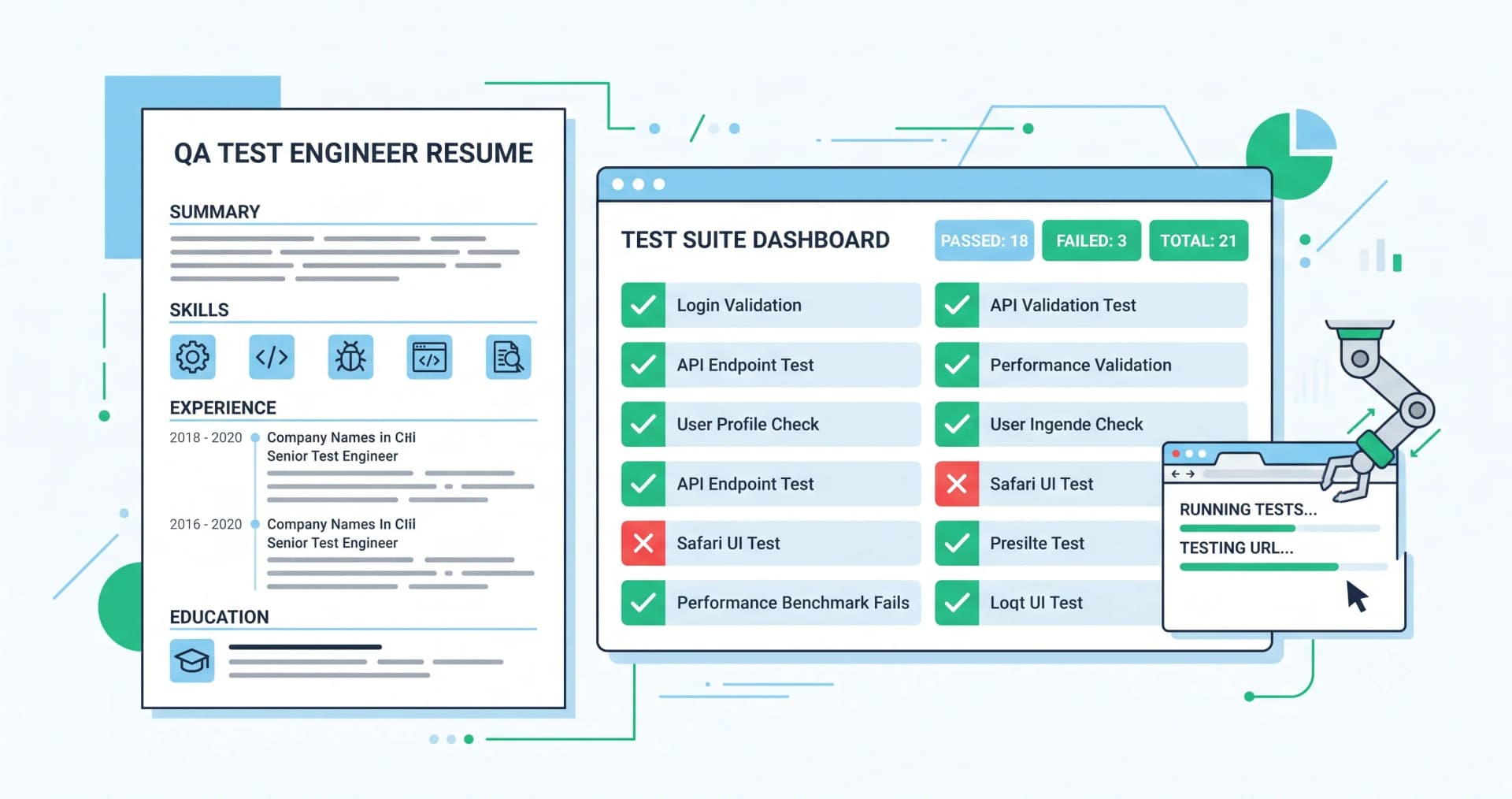
QA resumes are frequently under-written because the work is described as activity — 'performed regression testing' — rather than as risk removed. The fix is the same as everywhere else: numbers and consequences.
The QA numbers
- Automation coverage — 'automated 340 of 500 regression cases (68%)'
- Cycle time — 'cut the regression cycle from 4 days to 6 hours'
- Defect detection — 'found 40% of release-blocking defects before UAT'
- Escape rate — 'production defects per release down from 11 to 3'
- Scale — suites maintained, environments, devices or browsers covered
Manual, automation, or both — say which clearly
Indian QA hiring separates sharply into manual, automation and SDET tracks with different pay bands. Ambiguity costs you. If you're transitioning, state where you are: 'Manual QA for 3 years; now writing Playwright suites — automated 120 cases in the last 6 months.'
Performed functional, regression and smoke testing for web and mobile applications.
Owned regression for a 200-screen insurance portal; automated the top 120 flows in Selenium + TestNG, cutting each release cycle from 4 days to 7 hours and catching 3 payment-flow defects that had previously reached production.
Frameworks and tools worth naming
- Web — Selenium, Playwright, Cypress
- API — Postman, REST Assured, Karate
- Mobile — Appium, Espresso, XCUITest
- Performance — JMeter, k6, Gatling
- Management — JIRA, Zephyr, TestRail, qTest
- CI — Jenkins, GitHub Actions, Azure DevOps
Domain matters more in QA than elsewhere
Testing a payments flow, a medical device or a trading system requires domain knowledge that transfers. Name the domain and the compliance context — 'tested UPI and card flows under PCI-DSS scope' is a differentiator in the Indian market.
Put this into practice
Build, score and tailor your resume with JotCV — free plan, no card needed.
Check your QA resume