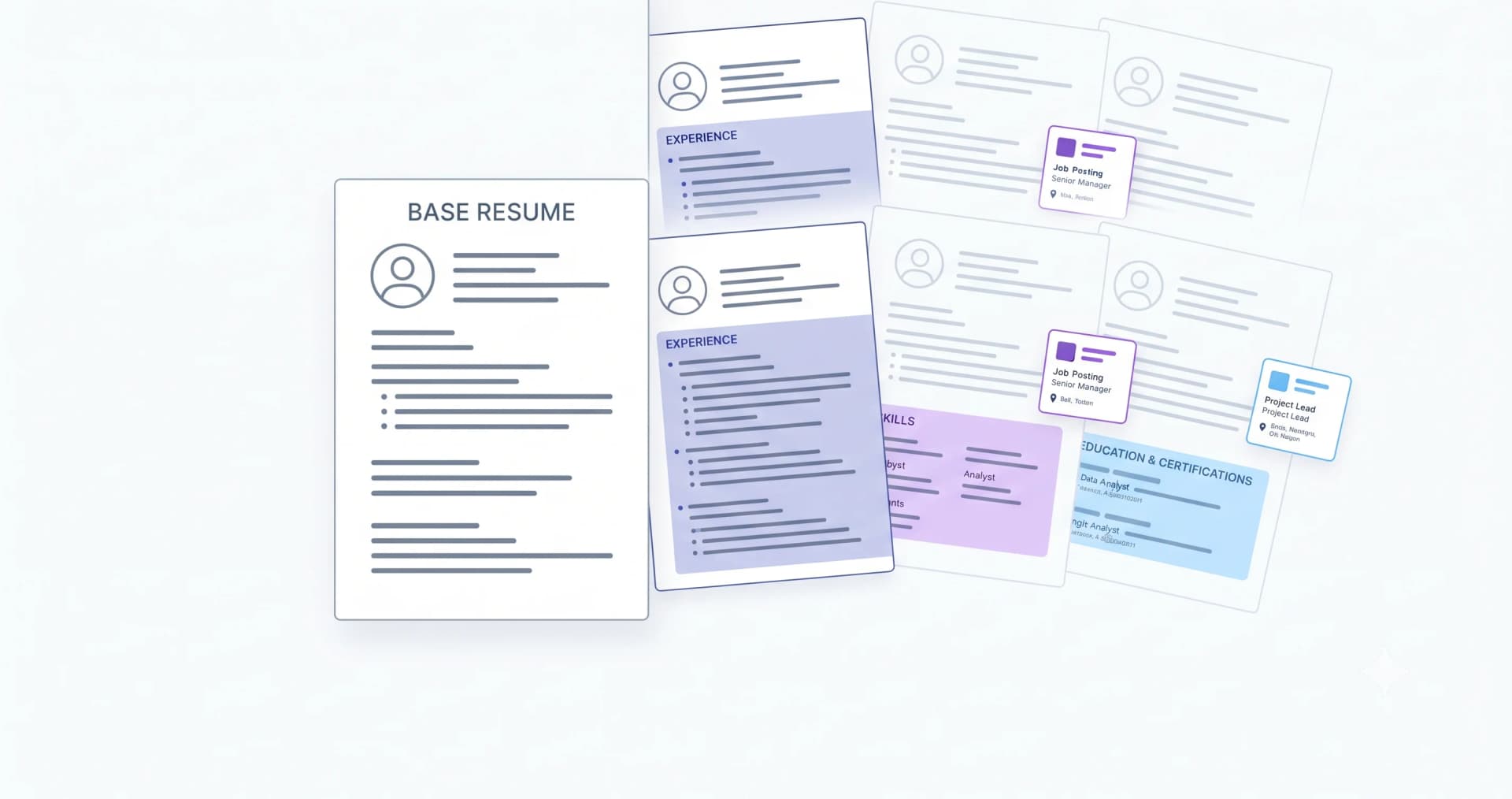
Sending the same resume to forty jobs is efficient and ineffective. Rewriting it forty times is effective and impossible. The workable middle is a fixed base plus four small edits that take ten minutes.
What stays fixed
Your employers, dates, degrees, certifications and the factual content of your bullets never change. Editing those per application creates version chaos and, eventually, a claim you can't back up in an interview.
The four things you do change
- The headline under your name — match it to the posted title when it's true: 'Backend Engineer · Python, Django, AWS'
- The summary's first sentence — lead with the experience this job cares about most
- Skills order — move the job's required tools to the front of each group
- Bullet order within your latest role — promote the two bullets closest to the job's top responsibilities
Reordering beats rewriting
Recruiters read top-down and stop early. Moving your Kubernetes bullet from fifth to first for an infrastructure role does more than any rewording, and it costs you thirty seconds with zero risk of introducing a claim you can't defend.
Keeping versions straight
- Name files by role, not by version: asha-verma-backend.pdf, asha-verma-data.pdf
- Keep at most three base variants — more than that and you stop maintaining them
- Record which version went where, so an interview call doesn't catch you out
When to do more than ten minutes
Two cases deserve a real rewrite: a role you badly want at a company you've researched, and a career change where the relevance of your experience isn't obvious. For everything else, the ten-minute pass captures most of the benefit.
Put this into practice
Build, score and tailor your resume with JotCV — free plan, no card needed.
Tailor a resume to a job description