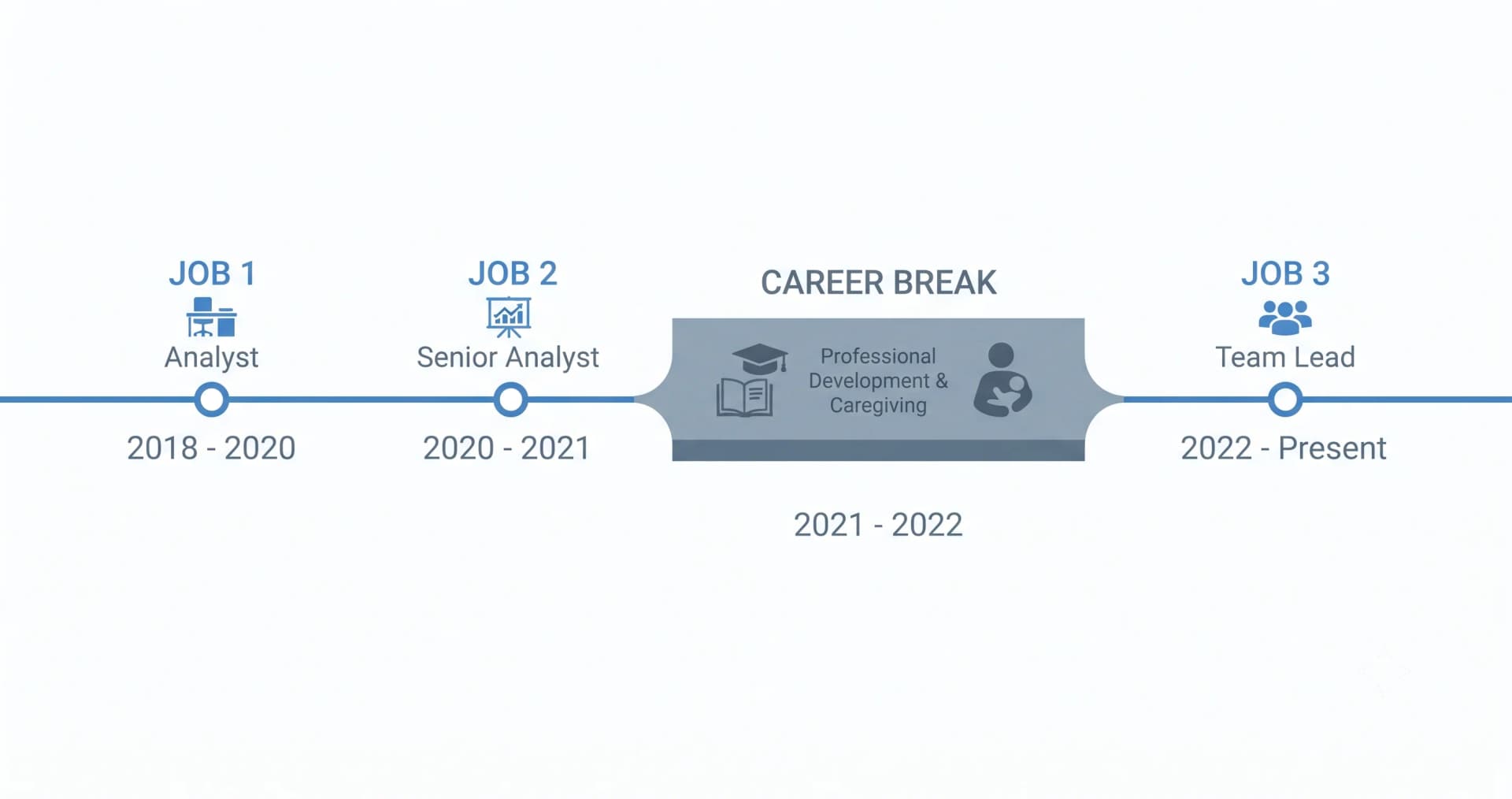
Gaps are far more common than resume advice implies, and recruiters see them constantly. What damages a candidacy is not the gap — it's the impression that you're hiding it.
Name it in one line
A gap you've labelled stops being a question. An unexplained eleven-month hole makes a reader invent an explanation, and their invention is usually worse than your truth.
[No entry between Mar 2023 and Feb 2024]
Career break · Mar 2023 – Feb 2024 — Full-time caregiver following a family illness. Completed the Google Data Analytics certificate during this period.
How much detail each reason needs
- Layoff or company shutdown — say it plainly; it carries no stigma at all now
- Health — 'medical leave, now fully recovered' is sufficient; never share a diagnosis
- Caring for family — a common and well-understood reason in India; one line
- Study or certification — name the qualification; this barely reads as a gap
- Relocation or visa — factual, one line
- A long search — 'actively job-searching' is honest, but pair it with what you did meanwhile
Use years, not months, for old gaps
If a gap is more than five years back and short, writing dates as years ('2018 – 2020') rather than months removes a distraction from work history that's no longer under scrutiny. This is presentation, not deception — the detail is available if anyone asks.
Show what continued
Any activity during the break helps: a certification, freelance work, volunteering, open-source contributions, running a household business, even a serious self-study project. It answers the unspoken question of whether your skills went stale.
Answering it in the interview
Two sentences and a forward pivot: what happened, that it's resolved, and why you're ready now. Rehearse it so it comes out level. Candidates lose more ground through a defensive tone than through the gap itself — the interviewer takes their cue from you.
What not to do
- Stretching your previous job's end date to cover the gap — verification catches it
- Inventing freelance work you can't describe in detail
- Writing a paragraph of explanation on the resume
- Apologising, in writing or in person
Put this into practice
Build, score and tailor your resume with JotCV — free plan, no card needed.
Add a career break entry