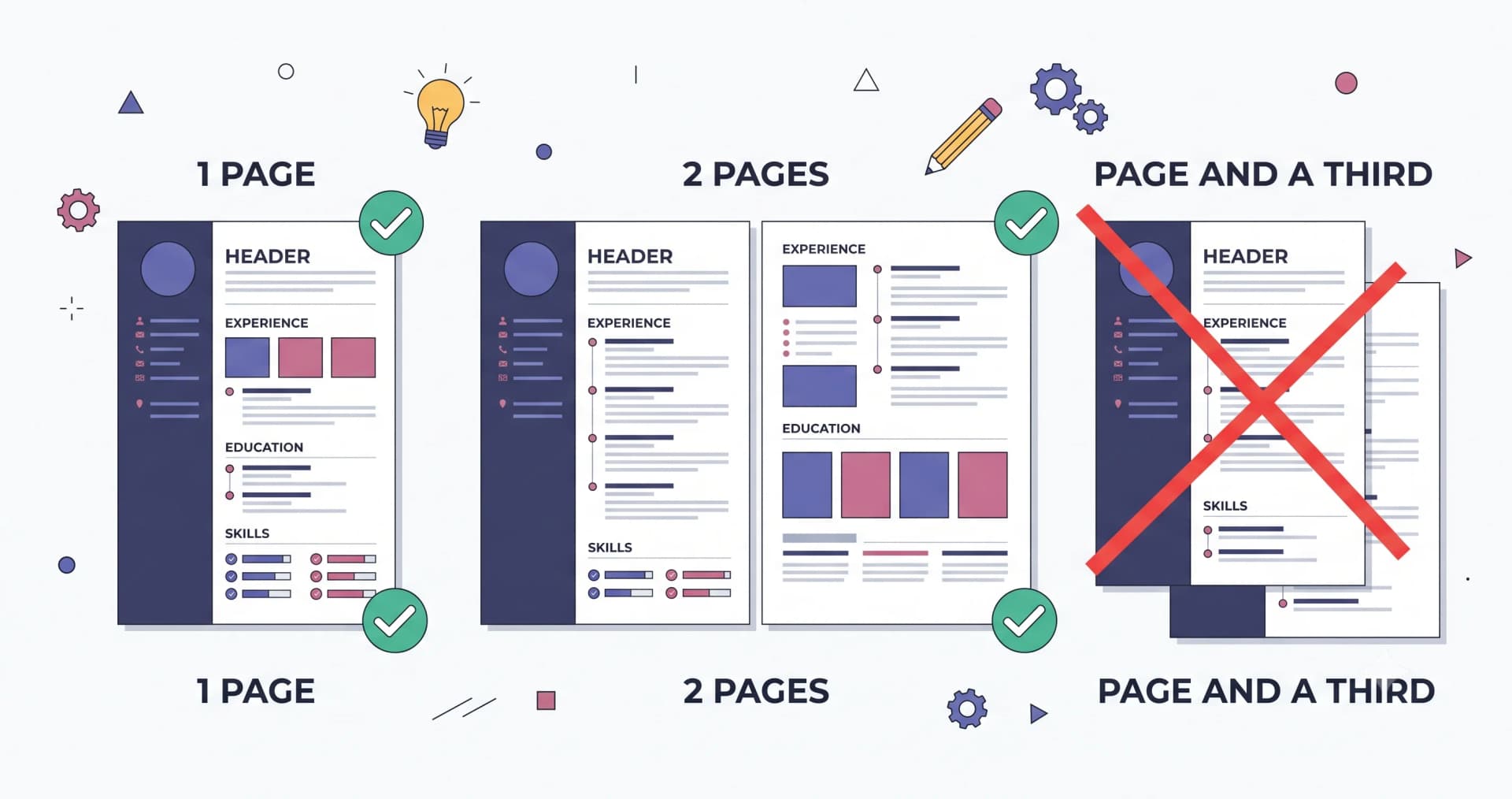
Length follows evidence. The rule is not 'one page always' — it's that every line must earn its place, and most people run out of things worth saying before the end of page two.
By experience level
- Fresher to 2 years — one page, no exceptions
- 3 to 8 years — one page if it fits comfortably, two if the second is full
- 8 to 15 years — two pages
- 15+ years, or academic/medical CVs — two to three, with older roles compressed to one line each
The half-page problem
A resume that runs to one and a third pages looks unfinished. Either cut it to one page or add enough to fill the second properly. The usual fix is trimming older roles, not shrinking the font to 9pt and the margins to 10mm — that's visible and it reads as desperate.
What belongs on page two
Older roles, additional certifications, publications, patents, conference talks, volunteering. Never your contact details, your most impressive achievement, or the skills the job asked for — page two gets read only if page one earned it.
What to cut first
- Roles older than 12–15 years, compressed to a single line
- School marks, once you have work experience
- Hobbies, unless genuinely relevant to the role
- 'References available on request' — assumed, wastes a line
- A declaration with signature and date — obsolete outside specific PSU formats
- Any skill you wouldn't want to be tested on
Repeat your name on page two
Pages get printed and separated. A small 'Asha Verma — page 2 of 2' at the top costs one line and prevents your second page becoming an orphan on someone's desk.
Put this into practice
Build, score and tailor your resume with JotCV — free plan, no card needed.
Try a one-page template