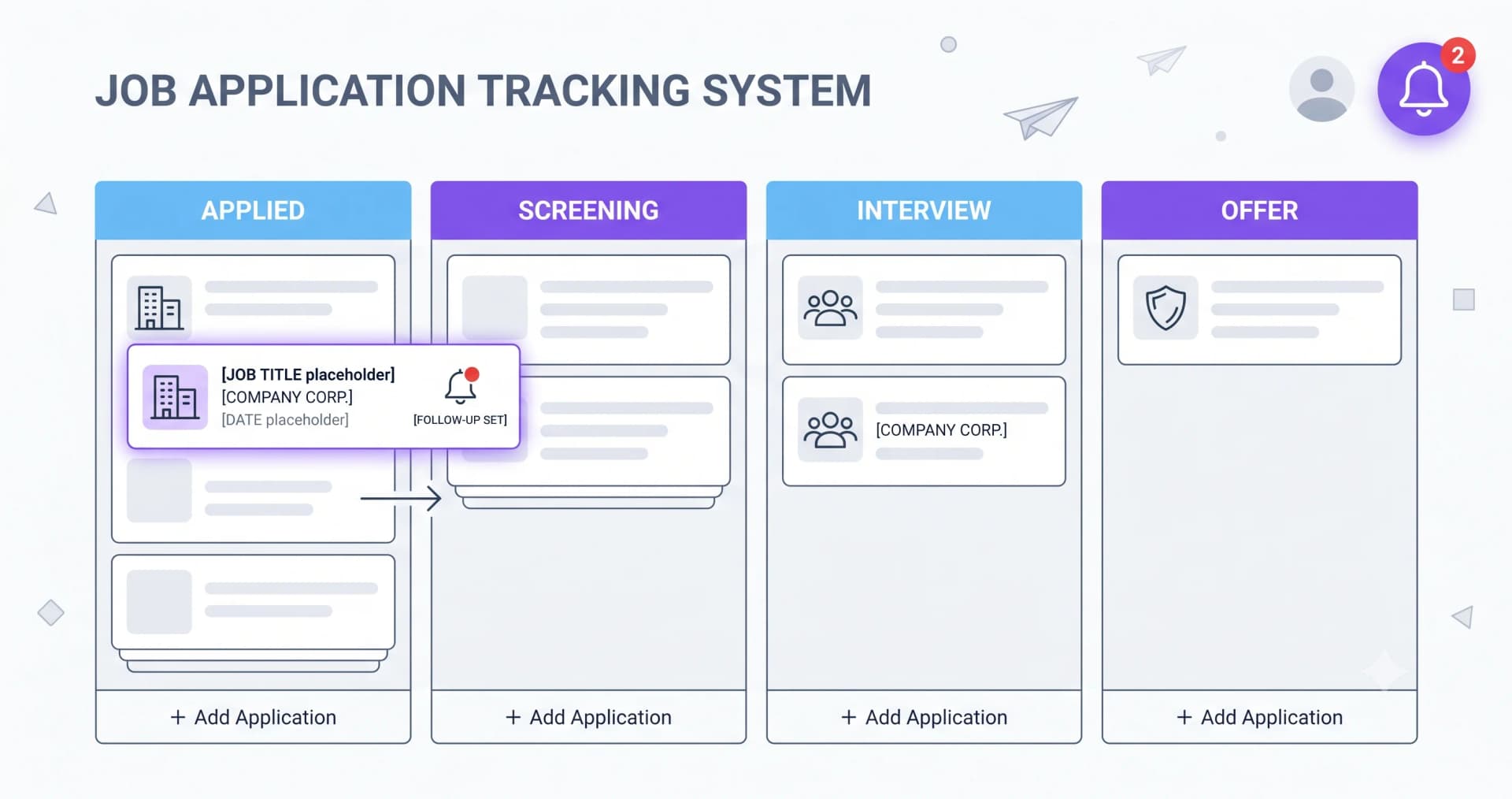
After thirty applications, nobody remembers which resume version went where or who they've already followed up with. That's when a search stops improving — you can't fix what you aren't measuring.
What to record
- Company, role, and the job posting link (postings get taken down)
- Date applied and the channel — portal, referral, cold email
- Which resume version you sent
- Contact name, if you have one
- Status: applied, screening, interview, offer, rejected, ghosted
- Next action and its date
The follow-up schedule
- Day 7 — one short follow-up if there's been no acknowledgement
- Day 14 — mark it dormant and stop chasing
- After an interview — thank-you note within 24 hours; follow up on the date they promised, plus two days
What tracking teaches you
After twenty entries, patterns show. If you're applying a lot and never hearing back, your resume or your targeting is wrong. If you get screening calls but no interviews, your positioning is off. If you interview and don't convert, it's the interview itself. Each diagnosis has a completely different fix, and without records you'll guess wrong.
Keep the volume honest
Ten carefully targeted applications with tailored resumes beat sixty blind ones, and the tracker makes the difference visible. If your log shows fifty applications with the same file attached, that's the finding.
Record the rejections too
Rejections carry data: which stage, how fast, and any feedback offered. A pattern of rejection after the technical round says something specific and actionable. Deleting those rows to feel better throws away the most useful part of the log.
Put this into practice
Build, score and tailor your resume with JotCV — free plan, no card needed.
Get JotCV free — includes the tracker