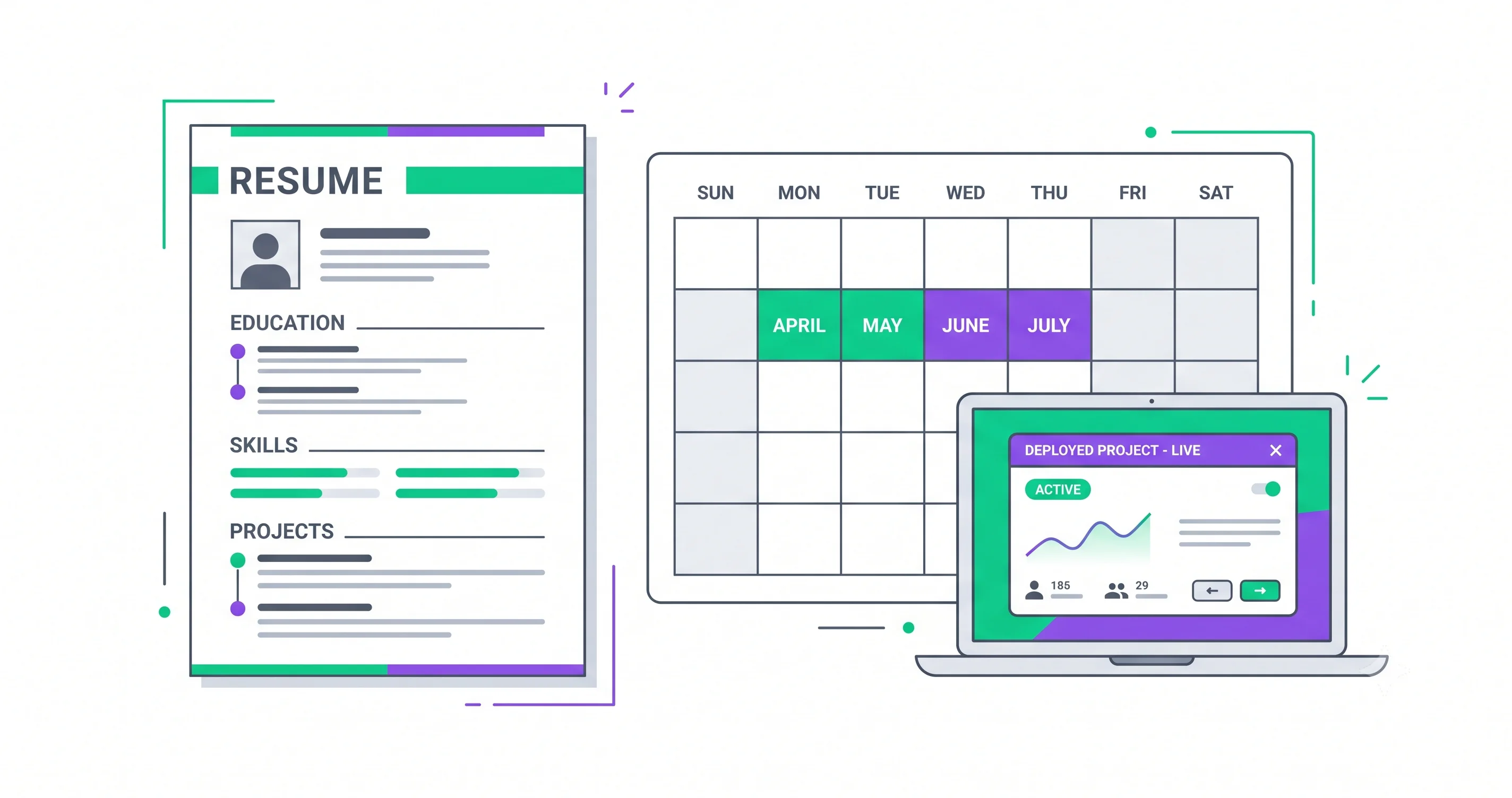
Internship hiring is the least formal stage of your career, and the most forgiving. Nobody expects a track record. They are checking that you can communicate, that you've built something, and that you'll show up.
What an internship resume needs
Half a page of substance beats a padded full page. The must-haves are narrow:
- Contact details that work — a personal email you check, not a college one that expires
- Course, college, year of study
- One or two projects, with links
- Skills you can demonstrate in a 20-minute call
- Availability: the exact months you can work, and whether you can do full-time hours
Availability is the detail everyone forgets
Internship coordinators are scheduling around your semester, and a resume that doesn't say when you're free creates work for them. 'Available full-time, May–July 2026; remote or Pune' answers the question that decides whether they read further.
Internshala vs. LinkedIn vs. cold email
- Internshala — the platform's own profile fields matter more than your PDF; fill every one, and write the cover-letter box specifically for each posting. Generic ones are visibly generic.
- LinkedIn — recruiters find you by skills and headline. Put 'CSE student · React, Python · Seeking Summer 2026 internship' in the headline.
- Cold email — the highest hit rate for small companies. One short paragraph, one relevant project link, resume attached.
If you have absolutely nothing to show yet
Spend the weekend fixing that rather than rewording your resume. A small, finished, deployed thing — a scraper, a Telegram bot, a landing page for a local business — creates the one line your resume is missing, and takes less time than a week of applications that go nowhere.
Put this into practice
Build, score and tailor your resume with JotCV — free plan, no card needed.
Make an internship resume